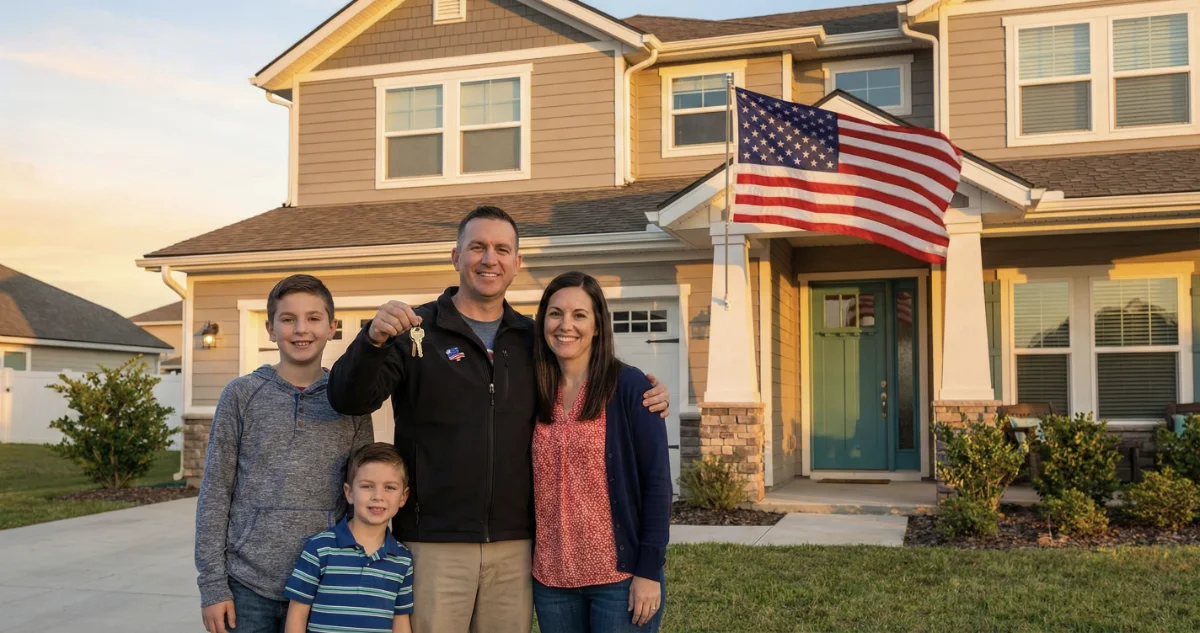
If you've served in the military, you've earned more than just the gratitude of a nation—you've earned access to one of the most powerful mortgage programs ever created. VA loans, backed by the U.S. Department of Veterans Affairs, offer benefits that no other loan type can match: zero down payment, no private mortgage insurance, and consistently competitive interest rates. Since 1944, the VA has guaranteed more than 28.5 million home loans, helping generations of service members achieve the dream of homeownership. Whether you're a veteran, active-duty service member, National Guard member, or eligible surviving spouse, this comprehensive guide will walk you through everything you need to know about VA loan eligibility, benefits, and the application process.
What Is a VA Loan and How Does It Work?
A VA loan is a mortgage option backed by the U.S. Department of Veterans Affairs. Unlike direct government lending, the VA doesn't actually lend you money. Instead, it guarantees a portion of your loan to private lenders—banks, mortgage companies, and credit unions—which allows them to offer you significantly better terms than conventional mortgages.
This guarantee reduces the lender's risk, which translates to real benefits for you: no down payment requirements, no private mortgage insurance (PMI), and more flexible qualification standards. The VA home loan program exists specifically to help veterans and service members purchase homes when they might otherwise struggle to meet conventional mortgage requirements.
Good to Know: Unlike conventional loans that typically require 5-20% down, or FHA loans that need at least 3.5%, VA loans allow you to finance 100% of the home's value.
Who Is Eligible for a VA Loan?
VA loan eligibility is based primarily on your military service history. The program serves several categories of individuals who have served their country.
Eligible Borrowers Include:
- Veterans with qualifying service
- Active-duty service members
- National Guard members
- Reserve members
- Certain surviving spouses of veterans
Minimum Service Requirements
Your required length of service depends on when and how you served:
Current Active-Duty Service Members need at least 90 continuous days of active duty service.
Gulf War Era Veterans (August 2, 1990 – Present) must have served 24 continuous months, the full period called to active duty (at least 90 days), or at least 90 days with a qualifying discharge exception.
Pre-Gulf War Veterans (September 8, 1980 – August 1, 1990) need 24 continuous months or at least 181 days of active-duty service.
National Guard Members qualify with 90 days of non-training active-duty service under Title 10, or 6 creditable years with continued service or an honorable discharge.
Reserve Members need 90 days of non-training active-duty service, or 6 creditable years in the Selected Reserve with continued service or honorable discharge.
Pro Tip: Even if you served less than the minimum required time, you may still qualify if you were discharged for a service-connected disability, hardship, or certain other qualifying reasons.
Surviving Spouse Eligibility
Surviving spouses may qualify for VA loan benefits if they are receiving (or are eligible to receive) VA Dependency and Indemnity Compensation (DIC), or if their spouse is classified as missing in action (MIA) or a prisoner of war (POW).
How to Get Your Certificate of Eligibility (COE)
Before you can obtain a VA loan, you'll need a Certificate of Eligibility (COE). This document confirms to lenders that you meet the VA's requirements for the home loan benefit.
Three Ways to Request Your COE:
- Online through VA.gov – The fastest method, often providing instant results
- Through your lender – Many VA-approved lenders can retrieve your COE electronically via the Web LGY system
- By mail – Submit VA Form 26-1880 (expect longer processing time)
Required Documents by Service Status
| Your Status | Documents You'll Need |
|---|---|
| Veteran | DD214 (discharge papers) |
| Active-Duty | Statement of service signed by commander |
| Activated Guard/Reserve | DD214 or discharge documents |
| Never-Activated Guard/Reserve | Statement of service showing creditable years |
According to the U.S. Department of Veterans Affairs, most veterans can obtain their COE instantly through the VA.gov online portal by logging in with their ID.me, Login.gov, or DS Logon credentials.
Key Benefits of VA Loans
VA loans offer a remarkable package of benefits that make homeownership more accessible and affordable for those who've served. Here's what sets them apart:
No Down Payment Required
This is the headline benefit. With a VA loan, you can purchase a home with zero down payment as long as the sales price doesn't exceed the appraised value. According to VA data, nearly 90% of VA-backed home loans are made without any down payment at all. For a $400,000 home, this means keeping $20,000-$80,000 in your pocket compared to conventional loan requirements.
No Private Mortgage Insurance (PMI)
When you put less than 20% down on a conventional loan, lenders require private mortgage insurance—typically adding $100-$300 per month to your payment. FHA loans require mortgage insurance premiums (MIP) for the life of the loan. VA loans require neither, saving you thousands over the life of your mortgage.
Competitive Interest Rates
VA loan interest rates consistently rank among the lowest available. Lower rates translate directly to lower monthly payments and significant lifetime savings. Even a 0.25% rate difference on a $350,000 loan saves approximately $15,000 over a 30-year term.
Flexible Credit Requirements
The VA itself doesn't mandate a minimum credit score. While individual lenders typically require scores around 620, VA loans are generally more forgiving of credit challenges than conventional mortgages. The program also offers shorter waiting periods after bankruptcy or foreclosure—often just two years compared to four or more for conventional loans.
Limited Closing Costs
VA regulations cap what lenders can charge for origination and processing fees. Sellers are permitted to pay all of the buyer's closing costs and can contribute up to 4% of the loan amount in concessions. Certain fees are also prohibited entirely for VA buyers. Most VA loans include escrow accounts to collect property taxes and homeowners insurance monthly, making budgeting easier.
No Prepayment Penalty
You can pay off your VA loan early—whether through extra payments, refinancing, or selling—without any penalties.
Bottom Line: For eligible borrowers, VA loans offer the lowest barrier to entry for homeownership of any major mortgage program, combining zero down payment with no PMI and favorable rates.
Understanding the VA Funding Fee
While VA loans don't require a down payment or PMI, they do include a one-time funding fee. This fee helps sustain the VA loan program for future generations of veterans. You can pay it at closing or finance it into your loan amount.
2026 Funding Fee Rates for Purchase Loans
| Down Payment | First-Time Use | Subsequent Use |
|---|---|---|
| Less than 5% | 2.15% | 3.30% |
| 5% to 9.99% | 1.50% | 1.50% |
| 10% or more | 1.25% | 1.25% |
For refinance loans, the Interest Rate Reduction Refinance Loan (IRRRL) carries just a 0.50% funding fee, while cash-out refinances follow the same rates as purchase loans.
Who Is Exempt from the Funding Fee?
You won't pay the funding fee if you:
- Receive VA compensation for a service-connected disability
- Are eligible for VA disability compensation but currently receive retirement or active-duty pay instead
- Are a surviving spouse receiving DIC benefits
- Have a Purple Heart (active-duty members, if received before closing)
- Have a pre-discharge claim with a proposed or memorandum rating before closing
According to the VA's official funding fee page, these exemptions can save you thousands of dollars at closing.
VA Loan Limits in 2026
One common question about VA loans concerns how much you can borrow. The answer depends on your entitlement status.
For Veterans with Full Entitlement: No Limit
Thanks to the Blue Water Navy Vietnam Veterans Act of 2020, veterans with full entitlement can borrow as much as a lender is willing to approve based on their creditworthiness—there's no VA-imposed cap.
For Veterans with Partial Entitlement: County Limits Apply
If you've already used some of your VA entitlement (and haven't restored it), conforming loan limits apply. For 2026, the Federal Housing Finance Agency has set these limits:
| Area Type | 2026 Limit |
|---|---|
| Baseline (most U.S. areas) | $832,750 |
| High-cost area ceiling | $1,249,125 |
| Alaska, Hawaii, Guam, USVI | Up to $1,249,125 |
These limits increased by $26,250 from 2025, reflecting rising home prices nationwide.
If you're purchasing a home that exceeds these limits, you'll need a jumbo loan, which typically requires a higher credit score, larger down payment, and more stringent financial documentation.
Types of VA Loans Available
The VA loan program offers several loan types to meet different needs:
VA Purchase Loan
The standard option for buying a home. You can use it for single-family homes (up to 4 units if you occupy one), VA-approved condominiums, manufactured homes, and new construction. The property must serve as your primary residence.
Interest Rate Reduction Refinance Loan (IRRRL)
Also called the "VA Streamline Refinance," this option lets you lower your monthly payment or switch from an adjustable rate to a fixed rate. Requirements are minimal—often no new appraisal or credit underwriting needed. The funding fee is just 0.50%, making it an affordable way to improve your loan terms.
Cash-Out Refinance Loan
Access your home equity for any purpose—debt consolidation, home improvements, education expenses, or other needs. This option is available to current VA loan holders and those refinancing from non-VA loans (converting to a VA loan). Most lenders allow refinancing up to 90% of your home's value.
Native American Direct Loan (NADL)
For Native American veterans or veterans married to Native Americans who want to buy, build, or improve a home on federal trust land. Unlike other VA loans, the VA serves as the direct lender for NADL loans.
VA Energy Efficient Mortgage
Add up to $6,000 to your purchase or refinance loan to finance energy improvements like solar heating, storm windows, insulation, or heat pumps.
VA Renovation Loan
Combine your home purchase or refinance with renovation costs in a single loan. This specialized product has limited lender availability but can be valuable for properties needing updates.
How to Apply for a VA Loan: Step-by-Step
Ready to start your VA loan journey? Here's the process from start to finish:
Step 1: Confirm Your Eligibility
Review the service requirements outlined above and gather your documentation. For most veterans, this means locating your DD214 discharge papers.
Step 2: Request Your Certificate of Eligibility
Use VA.gov for the fastest results, or let your chosen lender retrieve it electronically.
Step 3: Find a VA-Approved Lender
Not all mortgage lenders offer VA loans, so confirm VA approval upfront. Shop multiple lenders—rates, fees, and credit requirements vary significantly. Get at least three Loan Estimates to compare offers.
Step 4: Get Pre-Approved
Lenders will evaluate your finances using your COE, pay stubs (typically 30 days), W-2s (2 years), federal tax returns if required, bank statements, and asset documentation. Getting pre-approved for your mortgage strengthens your position when making offers.
Step 5: Find Your Home
Search for properties that meet VA requirements: single-family homes, condos, multi-unit properties (up to 4 units), manufactured homes, or new construction. Remember, you must occupy the property as your primary residence.
Step 6: Complete the VA Appraisal
Your lender will order a VA appraisal to establish market value and verify the property meets Minimum Property Requirements (MPRs). Learn how home appraisals work to understand what appraisers evaluate and what happens if the appraised value comes in lower than expected. Note that this appraisal is not a substitute for a home inspection—consider scheduling your own inspection to uncover potential issues.
Step 7: Final Underwriting and Approval
The lender reviews all documentation, verifies your credit and income, and confirms property eligibility. Stay responsive to any requests for additional information to keep your closing on track.
Step 8: Close and Get Your Keys
At closing, you'll sign final loan documents, pay any closing costs and/or the funding fee (if applicable), and receive the keys to your new home.
Common VA Loan Myths Debunked
Several misconceptions prevent eligible veterans from taking full advantage of their VA loan benefits:
Myth: VA loans take longer to close. Reality: Processing times are comparable to conventional loans. Many VA loans close in 30-45 days.
Myth: Sellers don't want to accept VA loan offers. Reality: While some sellers have outdated concerns, VA buyers are often strong candidates with stable income and verified financial backing.
Myth: You can only use a VA loan once. Reality: VA loan entitlement can be restored after paying off a previous VA loan, and you may even be able to have two VA loans simultaneously under certain circumstances.
Myth: VA loans are only for first-time buyers. Reality: The program serves all eligible veterans regardless of whether they've owned homes before. If you're a first-time homebuyer, though, VA loans offer an excellent path to homeownership.
VA Loan vs. Other Mortgage Options
How do VA loans stack up against alternatives? Here's a quick comparison:
| Feature | VA Loan | Conventional | FHA | USDA |
|---|---|---|---|---|
| Down Payment | 0% | 3-20% | 3.5% | 0% |
| PMI/MIP | None | Required under 20% down | Required for life of loan | Guarantee fee required |
| Minimum Credit Score | No VA minimum (lender varies) | 620-680+ | 500-580+ | Typically 640 |
| Funding Fee | 0.50%-3.30% (many exempt) | None | 1.75% upfront + annual | 1% upfront + 0.35% annual |
| Property Types | Primary residence only | Any | Primary residence only | Rural/suburban primary residence |
For eligible borrowers, VA loans typically offer the best combination of low upfront costs and favorable ongoing terms. If you're not VA-eligible but looking for a zero-down option in a rural or suburban area, USDA loans provide another pathway to homeownership without a down payment.
Frequently Asked Questions
No, VA loans require you to occupy the property as your primary residence. However, you can purchase a multi-unit property (up to 4 units), live in one unit, and rent out the others. This strategy allows you to generate rental income while still meeting the occupancy requirement.
The VA requires you to certify that you intend to occupy the property as your primary residence. While there's no specific minimum timeframe written in stone, you generally need to move in within 60 days of closing and maintain it as your primary residence. Life circumstances (PCS orders, job changes) may allow you to rent out the property later.
Yes, it's possible under certain circumstances. If you have remaining entitlement after your first VA loan, you can use it for a second property. This commonly happens when service members receive PCS orders and want to keep their current home as a rental while purchasing in their new location.
The VA doesn't set a minimum credit score, but most lenders require around 620. Some lenders work with lower scores, so it's worth shopping around if your credit isn't perfect. VA loans are generally more forgiving of credit challenges than conventional mortgages.
Yes, through the VA Cash-Out Refinance program. This allows you to refinance your current conventional, FHA, or other mortgage into a VA loan, potentially accessing equity while gaining VA loan benefits like no PMI.
The VA funding fee is generally considered a form of mortgage insurance and may be tax-deductible in certain years. Tax laws change regularly, so consult a tax professional or refer to current IRS guidance for your specific situation.
Resources for VA Loan Borrowers
The following official resources provide additional information and support:
- VA Housing Assistance Portal: va.gov/housing-assistance/home-loans/
- COE Request: va.gov/housing-assistance/home-loans/how-to-request-coe/
- VA Loan Guaranty Support: 1-877-827-3702 (Monday-Friday, 8am-6pm ET)
- CFPB Home Loan Toolkit: consumerfinance.gov/owning-a-home/
Final Thoughts
VA loans represent one of the most valuable benefits available to those who've served in the U.S. military. With no down payment requirement, no PMI, competitive interest rates, and flexible qualification standards, they make homeownership achievable for millions of veterans and service members who might otherwise struggle to buy a home.
If you're eligible, there's rarely a reason not to explore VA financing. Start by requesting your Certificate of Eligibility, then shop multiple lenders to find the best terms for your situation. Your service has earned you this benefit—take advantage of it.
For those just beginning their homebuying journey, our first-time homebuyer guide provides additional context on the overall process, while our guide to mortgage pre-approval can help you understand how lenders evaluate your application.
Disclaimer: The information provided on RichCub is for educational purposes only and should not be considered financial, legal, or investment advice. We recommend consulting with a qualified financial advisor before making any financial decisions. RichCub may receive compensation through affiliate links or advertising on this site.
RichCub Editorial Team
Contributor
FHA Loans Explained: Requirements, Limits & How to Qualify
First-Time Homebuyer's Guide: Your Complete Roadmap to Buying a Home
Related Articles
Interest-Only Mortgages: How They Work, Risks & Who Should Consider One
Learn how interest-only mortgages work, their benefits and risks, qualification requirements, and whether this non-QM loan type fits your financial situation.
Mortgage Forbearance: How It Works & Your Exit Options Explained
Learn how mortgage forbearance works, eligibility requirements, credit impacts, and six exit strategies to protect your home and financial future.
Mortgage Rate Lock: When to Lock, Costs & Float-Down Options
Learn how mortgage rate locks protect your interest rate, when to lock in your rate, typical costs, and how float-down options work.