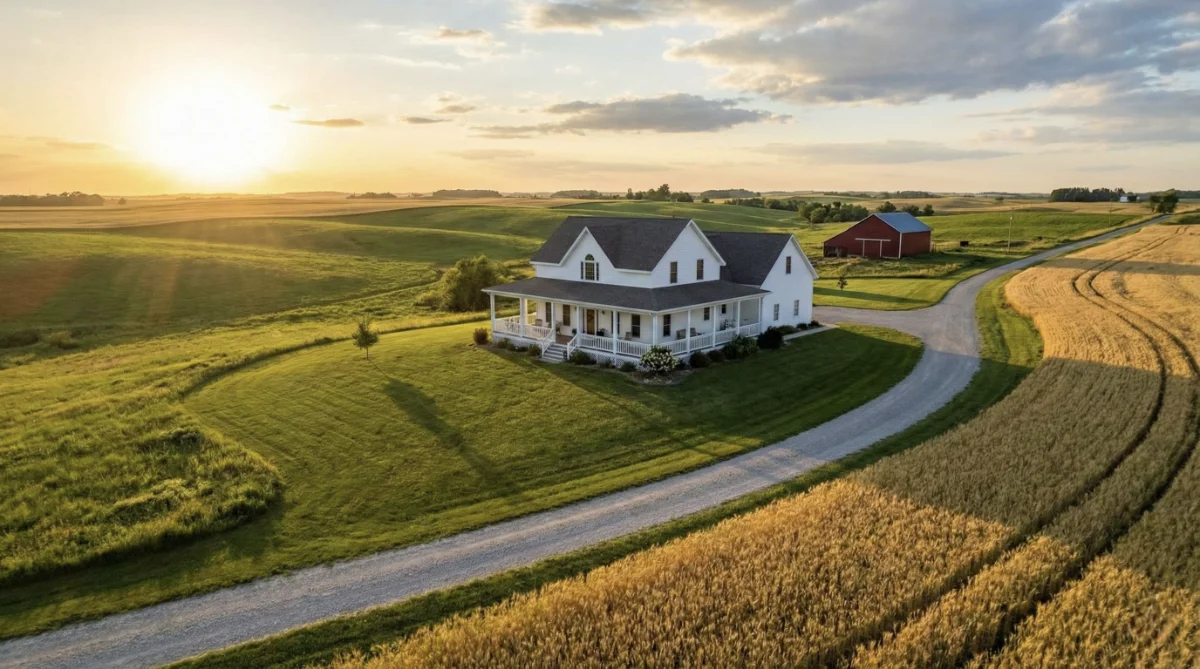
If you're dreaming of homeownership but struggling to save for a down payment, a USDA loan might be your pathway to owning a home with zero money down. Backed by the U.S. Department of Agriculture, these government-guaranteed mortgages help moderate-income buyers purchase homes in designated rural and suburban areas. Unlike FHA loans that require 3.5% down or conventional loans requiring 3-20%, USDA loans offer 100% financing with competitive interest rates—often below market averages. With approximately 97% of U.S. land mass qualifying as USDA-eligible, this program reaches far beyond remote farmland into thriving suburban communities. Whether you're a first-time homebuyer or looking to relocate to a less urban area, understanding USDA loan requirements could save you thousands in upfront costs and monthly payments.
What Is a USDA Loan?
A USDA loan is a mortgage program backed by the United States Department of Agriculture's Rural Development division. Established to promote homeownership in rural America, these loans provide affordable financing options for eligible buyers who might otherwise struggle to qualify for traditional mortgages.
The USDA offers three main housing programs:
USDA Guaranteed Loans (Section 502 Guaranteed)
This is the most popular USDA loan type. Private lenders issue these mortgages, with the USDA guaranteeing up to 90% of the loan value. This government backing reduces lender risk, allowing them to offer favorable terms including:
- Zero down payment requirement
- Competitive interest rates
- 30-year fixed-rate terms
- No formal loan limits (unlike conventional conforming loans)
- Available to households earning up to 115% of the area median income
USDA Direct Loans (Section 502 Direct)
These loans come directly from USDA Rural Development offices and target low and very low-income applicants. Key features include:
- Current interest rate of 5.00%, potentially reduced to as low as 1% with payment assistance
- Loan terms up to 33 years (38 years for very low-income borrowers)
- Loan limits ranging from $419,300 to $970,800 depending on county
- Stricter income requirements than guaranteed loans
USDA Home Improvement Loans (Section 504)
For homeowners needing to repair or improve existing properties:
- Loans up to $40,000
- Grants up to $10,000 for very low-income homeowners aged 62 and older
- 20-year terms at 1% interest for qualifying borrowers
Common Misconception: Many people believe USDA loans are only for farmers or properties with acreage. In reality, these loans finance single-family homes, townhomes, and condos in eligible areas—you don't need to own livestock or grow crops to qualify.
USDA Loan Eligibility Requirements
Meeting USDA loan requirements involves satisfying criteria in three main categories: income, property location, and creditworthiness.
Income Requirements
USDA loans have both minimum and maximum income thresholds:
For Guaranteed Loans:
- Household income cannot exceed 115% of the area median income (AMI)
- Income limits vary significantly by location and household size
- Some high-cost areas allow six-figure household incomes
- All household members' income counts, not just the borrower's
For Direct Loans:
- Must fall within low or very low-income categories
- Thresholds determined by county and household size
- More restrictive than guaranteed loan limits
You can check your specific county's income limits using the USDA Eligibility Tool.
Debt-to-Income Requirements
USDA loans impose specific debt-to-income (DTI) ratio limits:
- Front-end ratio (housing costs): Monthly mortgage payment, including principal, interest, taxes, and insurance (PITI), cannot exceed 29% of gross monthly income
- Back-end ratio (total debt): All monthly debt obligations cannot exceed 41% of gross monthly income
If your DTI ratios slightly exceed these limits, strong compensating factors—like substantial savings, excellent credit, or stable employment history—may help you qualify anyway. Ask your lender about exceptions.
Property Location Requirements
This is where USDA loans differ most from other mortgage types. The property must be located in a USDA-designated rural area. However, "rural" doesn't mean isolated:
- Approximately 97% of U.S. land area qualifies
- Many suburban communities just outside metro areas are eligible
- Towns and small cities with populations under 35,000 often qualify
- Some areas with populations up to 20,000-35,000 remain eligible due to rural characteristics
Use the official USDA Property Eligibility Map to verify whether a specific address qualifies before house hunting.
Credit Requirements
While USDA doesn't mandate a minimum credit score, lenders typically require:
- 640+ credit score: For streamlined, automated underwriting approval
- Below 640: Manual underwriting may be available, requiring additional documentation and justification
- Clean credit history: No bankruptcies within 3 years, no foreclosures within 3 years
- Dependable income history: Typically 2 years of steady employment
Additional Basic Requirements
- U.S. citizen, qualified alien, or non-citizen national
- Legal age to sign a mortgage in your state
- Not presently suspended from federal programs
- Property must be owner-occupied primary residence (no investment properties or vacation homes)
USDA Loan Costs and Fees
While USDA loans eliminate the down payment, they're not completely fee-free. Understanding the costs helps you budget accurately and compare with other loan options like VA loans or conventional mortgages.
USDA Guarantee Fees (Mortgage Insurance)
Instead of traditional private mortgage insurance (PMI), USDA loans charge guarantee fees:
Upfront Guarantee Fee:
- 1.0% of the loan amount
- Can be rolled into the mortgage (no out-of-pocket cost required)
- Example: $200,000 loan = $2,000 upfront fee
Annual Fee:
- 0.35% of the remaining loan balance
- Paid monthly as part of your mortgage payment
- Continues for the life of the loan
- Example: $200,000 loan = approximately $700 per year ($58/month initially)
Unlike conventional PMI that drops off at 20% equity, USDA annual fees continue for the entire loan term. However, USDA's combined upfront and annual fees are typically lower than FHA's mortgage insurance premiums, making USDA loans more affordable over time.
Additional Closing Costs
Beyond guarantee fees, expect standard closing costs of 2-5% of the loan amount:
| Cost Type | Typical Range |
|---|---|
| Origination fees | 0.5-1% of loan amount |
| Appraisal | $300-$500 |
| Title insurance | $500-$1,500 |
| Credit report | $30-$50 |
| Underwriting fee | $300-$900 |
| Recording fees | $100-$300 |
| Survey (if required) | $200-$500 |
| Escrow deposits | 2-6 months of taxes/insurance |
Good news: Sellers can contribute up to 6% of the purchase price toward your closing costs, and you can roll eligible closing costs into your loan amount if the home appraises above the purchase price.
USDA Loans vs. Other Mortgage Types
Understanding how USDA loans compare to alternatives helps you choose the best financing for your situation. Here's a comprehensive comparison:
| Feature | USDA Loan | Conventional | FHA Loan | VA Loan |
|---|---|---|---|---|
| Down Payment | 0% | 3-20% | 3.5% | 0% |
| Credit Score | 640 typical | 620+ | 580+ | No minimum |
| Income Limits | Yes (115% AMI) | No | No | No |
| Location Limits | Rural areas only | None | None | None |
| Mortgage Insurance | 1% upfront + 0.35%/year | PMI until 20% equity | 1.75% upfront + 0.85%/year | None (funding fee instead) |
| DTI Limit | 29%/41% | Up to 45% | Up to 50% | Up to 41% |
| Property Type | Primary residence | Any | Primary residence | Primary residence |
| Military Service | Not required | Not required | Not required | Required |
When USDA Beats the Competition
Choose USDA over FHA if:
- You can meet income limits
- Property is in an eligible area
- You want lower long-term mortgage insurance costs
Choose USDA over Conventional if:
- You don't have 20% down payment saved
- Your credit is between 640-720
- You want to maximize buying power with zero down
Choose VA over USDA if:
- You're a veteran or active-duty military
- Property isn't in a USDA-eligible area
- You want no ongoing mortgage insurance
How to Apply for a USDA Loan
The USDA loan application process follows a structured path. Here's your step-by-step roadmap:
Step 1: Check Your Eligibility
Before getting emotionally attached to any property:
- Verify income eligibility: Use the USDA income eligibility tool to confirm your household income falls within limits for your desired area
- Check property eligibility: Use the USDA property map to identify eligible areas where you want to buy
- Review your credit: Obtain your credit reports and scores to identify any issues needing attention
Step 2: Choose Your Loan Type
Decide between:
- Guaranteed Loan: Apply through approved private lenders (banks, credit unions, mortgage companies)
- Direct Loan: Apply through your local USDA Rural Development office
Most borrowers choose guaranteed loans for faster processing and more lender options.
Step 3: Find a USDA-Approved Lender
Not all mortgage lenders offer USDA loans. Look for:
- Lenders experienced with USDA programs
- Competitive interest rates
- Reasonable closing costs
- Strong customer reviews
According to the Consumer Financial Protection Bureau, comparing multiple lenders can save thousands over your loan's lifetime.
Step 4: Gather Required Documentation
Prepare these documents before applying:
Income Verification:
- Pay stubs from the past 30 days
- W-2 forms from the past 2 years
- Tax returns from the past 2 years
- Documentation of other income (Social Security, alimony, etc.)
Asset Documentation:
- Bank statements (2-3 months)
- Investment account statements
- Gift letter (if receiving down payment assistance)
Personal Information:
- Government-issued ID
- Social Security number
- Employment history (past 2 years)
- Residence history (past 2 years)
Step 5: Get Preapproved
A preapproval letter shows sellers you're a serious buyer with financing lined up. The lender will:
- Pull your credit report
- Verify income and employment
- Calculate your maximum loan amount
- Issue a preapproval letter (typically valid 60-90 days)
Step 6: Find Your Home
With preapproval in hand, work with a real estate agent familiar with USDA-eligible areas. Remember:
- Property must meet USDA minimum property requirements
- Location must be verified as eligible before making an offer
- Consider properties that may appraise above purchase price (allowing you to roll in closing costs)
Step 7: Complete the Loan Process
After your offer is accepted:
- Lender orders USDA appraisal
- Underwriting reviews all documentation
- USDA issues loan commitment
- Final approval and clear to close
- Sign closing documents and receive keys
Processing typically takes 30-45 days for guaranteed loans, though direct loans may take longer due to limited USDA office capacity.
Advantages and Disadvantages of USDA Loans
Advantages
✅ Zero Down Payment: The biggest benefit—keep your savings for moving costs, furniture, or emergency reserves
✅ Below-Market Interest Rates: USDA rates often run 0.25-0.5% lower than conventional rates
✅ Lower Mortgage Insurance: Combined guarantee fees cost less than FHA's MIP over time
✅ Flexible Credit Standards: Manual underwriting available for borrowers with scores below 640
✅ Seller Concessions Allowed: Sellers can pay up to 6% of closing costs
✅ No Loan Limits: Guaranteed loans don't have formal maximum amounts (unlike conforming limits)
✅ Refinancing Options: Streamlined refinancing available for existing USDA borrowers
Disadvantages
❌ Geographic Restrictions: Must buy in USDA-eligible rural areas
❌ Income Limits: Higher earners won't qualify, even if they want rural property
❌ Primary Residence Only: No investment properties or vacation homes
❌ Ongoing Fees: Annual guarantee fee lasts the entire loan term
❌ Longer Processing: May take longer than conventional loans due to USDA review
❌ Property Condition Requirements: Home must meet USDA habitability standards
Tips for USDA Loan Success
Based on NerdWallet's research and industry best practices, these strategies improve your approval odds:
-
Check eligibility early: Verify both income and property location before house hunting to avoid disappointment
-
Boost your credit score: Even without a hard minimum, higher scores mean better rates and easier approval
-
Reduce existing debt: Lowering your DTI ratio expands your buying power and approval chances
-
Document everything: Keep organized records of income, assets, and employment—USDA underwriting is thorough
-
Work with experienced professionals: Choose a real estate agent and lender familiar with USDA programs
-
Consider slightly rural areas: Look just outside city limits where prices may be lower and USDA eligibility more certain
-
Be patient: USDA processing takes time—start early and maintain communication with your lender
Conclusion
USDA loans represent one of the most valuable yet underutilized homeownership tools available to American buyers. With zero down payment requirements, competitive interest rates, and lower overall mortgage insurance costs than FHA loans, the program makes homeownership accessible to moderate-income families in rural and suburban communities across the country.
The key to USDA loan success lies in understanding eligibility requirements upfront. Check your income against county limits, verify your desired property's location on the official USDA map, and work with lenders experienced in USDA financing. While geographic restrictions limit where you can buy, the financial benefits—potentially saving tens of thousands in down payment and mortgage insurance costs—make these limitations worthwhile for many buyers.
If you're exploring your mortgage options, compare USDA loans alongside FHA, VA, and conventional financing to find the best fit for your situation. For first-time buyers, our comprehensive first-time homebuyer guide provides additional context on navigating the home purchase process.
Ready to explore USDA loan eligibility? Start by checking the USDA Property Eligibility Map and Income Eligibility Tool to determine if this zero-down-payment path to homeownership works for you.
While USDA doesn't set an official minimum credit score, most lenders require 640 or higher for streamlined automated underwriting approval. Borrowers with scores below 640 may still qualify through manual underwriting, which involves additional documentation and lender review. According to Bankrate, higher credit scores also help you secure better interest rates, so improving your score before applying can save thousands over your loan's lifetime.
Yes! Despite the "rural" designation, many suburban communities qualify for USDA financing. Approximately 97% of U.S. land area is USDA-eligible, including areas just outside major metro centers. The key is checking specific addresses using the official USDA Property Eligibility Map before making an offer. Areas with populations under 35,000 frequently qualify, and some larger communities retain eligibility due to rural characteristics.
USDA guaranteed loans typically take 30-45 days from application to closing, similar to conventional mortgages. However, USDA direct loans—issued directly by USDA offices—may take longer due to limited government staffing and additional review requirements. Processing times can extend during peak buying seasons or if your application requires manual underwriting. Starting your application early and having all documentation ready helps avoid delays.
USDA loans require properties to meet minimum habitability standards—they must be "decent, safe, and sanitary." While minor repairs might be acceptable, homes requiring significant rehabilitation typically won't qualify for standard USDA purchase loans. However, the USDA Section 504 Home Repair program offers loans up to $40,000 (and grants up to $10,000 for qualifying seniors) to improve existing properties. If you're set on a fixer-upper, consider FHA 203(k) renovation loans as an alternative.
USDA loans don't have traditional PMI, but they do charge guarantee fees that function similarly. You'll pay a 1.0% upfront guarantee fee (which can be rolled into the loan) plus a 0.35% annual fee paid monthly throughout the loan term. These costs are typically lower than FHA mortgage insurance premiums. Unlike conventional PMI that drops at 20% equity, USDA annual fees continue for the loan's lifetime unless you refinance into a different loan type.
Once your USDA loan closes, income increases don't affect your existing mortgage. The income eligibility check only applies at the time of application and approval. If you later earn more than 115% of the area median income, your loan remains in place with no penalties or adjustments. However, if you want to refinance through USDA's streamlined program in the future, you'd need to meet income requirements again at that time.
Yes, USDA loans can finance manufactured homes under certain conditions. The home must be new, permanently installed on a foundation, and meet HUD standards. It must also be the borrower's primary residence on an eligible site. Existing manufactured homes may qualify for USDA direct loans but typically don't qualify for guaranteed loans. Contact a USDA-approved lender to verify specific manufactured home eligibility requirements in your state.
Disclaimer: The information provided on RichCub is for educational purposes only and should not be considered financial, legal, or investment advice. We recommend consulting with a qualified financial advisor before making any financial decisions. RichCub may receive compensation through affiliate links or advertising on this site.
RichCub Editorial Team
Contributor
How to Refinance Your Mortgage: A Complete Guide
Conventional Loans Explained: Requirements, Rates & How to Qualify
Related Articles
Interest-Only Mortgages: How They Work, Risks & Who Should Consider One
Learn how interest-only mortgages work, their benefits and risks, qualification requirements, and whether this non-QM loan type fits your financial situation.
Mortgage Forbearance: How It Works & Your Exit Options Explained
Learn how mortgage forbearance works, eligibility requirements, credit impacts, and six exit strategies to protect your home and financial future.
Mortgage Rate Lock: When to Lock, Costs & Float-Down Options
Learn how mortgage rate locks protect your interest rate, when to lock in your rate, typical costs, and how float-down options work.