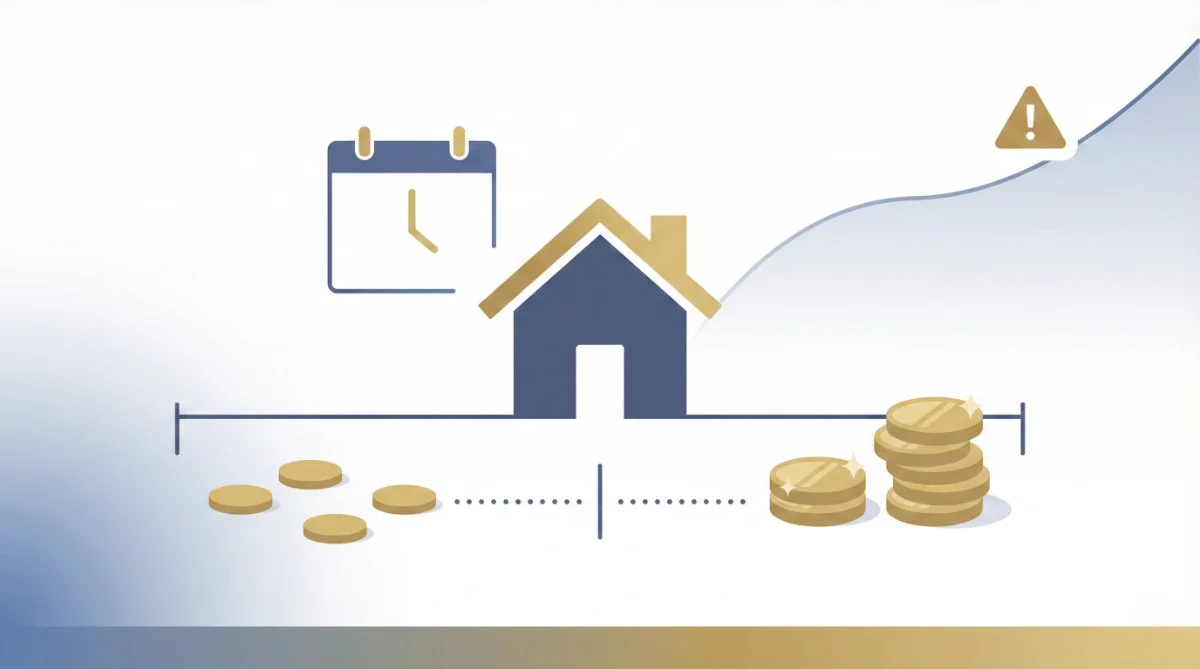
An interest-only mortgage lets you pay just the interest on your loan for an initial period—typically 3 to 10 years—resulting in monthly payments that are 20-40% lower than conventional mortgages. However, these savings come with significant trade-offs: you build no equity during this period, face substantial payment increases when the interest-only phase ends, and pay considerably more in total interest over the loan's lifetime. Interest-only mortgages are classified as non-qualified mortgages (non-QM), meaning they have stricter qualification requirements and aren't backed by government agencies. This guide explains exactly how these loans work, who should consider them, and the exit strategies you need before signing.
What Is an Interest-Only Mortgage?
An interest-only mortgage is a home loan where you pay only the interest portion of your debt for a set introductory period. During this phase, your monthly payment doesn't include any principal repayment, which means your loan balance stays exactly the same.
After the interest-only period expires, the loan converts to a fully amortizing schedule. At this point, you start paying both principal and interest, but over a shorter remaining term—which means significantly higher monthly payments.
Interest-only mortgages are classified as non-qualified mortgages (non-QM) under Consumer Financial Protection Bureau (CFPB) regulations. This means they don't meet the Ability-to-Repay rule's "safe harbor" protections and cannot be sold to Fannie Mae or Freddie Mac.
How the Payment Structure Works
The mechanics of an interest-only mortgage involve two distinct phases:
Phase 1: Interest-Only Period (3-10 years)
- You pay only the interest accruing on your loan
- Your principal balance remains unchanged
- Monthly payments are substantially lower than conventional mortgages
- You build zero equity through payments (though your home may appreciate)
Phase 2: Amortization Period (Remaining term)
- Loan converts to fully amortizing payments
- You now pay both principal and interest
- Payments increase significantly—often by 30-50% or more
- The principal must be repaid over a compressed timeframe (typically 20-25 years)
Interest-Only Payment Example
To illustrate the real-world impact, consider a $300,000 loan at a 7.22% interest rate:
| Loan Type | Initial Monthly Payment | Post-I/O Payment | Total Interest Paid |
|---|---|---|---|
| 10-Year Interest-Only | $1,805 | $2,366 | $484,362 |
| Conventional 30-Year Fixed | $2,040 | $2,040 | $434,554 |
| Difference | -$235/month savings | +$326/month higher | +$49,808 more |
As this example from LendingTree demonstrates, while you save approximately $235 per month during the interest-only period, you ultimately pay nearly $50,000 more in total interest over the life of the loan.
Types of Interest-Only Mortgages
Interest-only mortgages come in several structures, each with different risk profiles and use cases.
Interest-Only ARMs (Most Common)
The most prevalent form of interest-only mortgage is paired with an adjustable-rate mortgage (ARM). These loans offer a fixed interest rate during the introductory interest-only period, after which the rate adjusts periodically based on market conditions.
Common structures include:
- 5/1 I/O ARM: 5 years interest-only at a fixed rate, then annual adjustments
- 7/1 I/O ARM: 7 years interest-only at a fixed rate, then annual adjustments
- 10/1 I/O ARM: 10 years interest-only at a fixed rate, then annual adjustments
With an interest-only ARM, you face a "double hit" when the I/O period ends: your payment increases because you start paying principal AND your rate may adjust upward. Budget for worst-case scenarios.
Interest-Only Fixed-Rate Mortgages
Less common than their ARM counterparts, interest-only fixed-rate mortgages maintain the same interest rate throughout the entire loan term. After the interest-only period, payments increase due to principal repayment, but the rate itself doesn't change.
These loans typically feature:
- Fixed rate for 30-year term
- Interest-only period of 5-10 years
- Higher initial rates than I/O ARMs
- More predictable payment increases
Interest-Only with Balloon Payment
Some interest-only loans require the full remaining balance to be paid at the end of the interest-only period—a "balloon payment." This structure carries the highest risk because you must either:
- Pay off the entire loan balance in a lump sum
- Refinance into a new mortgage
- Sell the property
Understanding the different mortgage rate structures helps you evaluate which interest-only option might suit your situation.
Qualification Requirements for Interest-Only Mortgages
Because interest-only mortgages carry more risk for lenders, qualification requirements are substantially stricter than conventional loans.
Comparison of Requirements
| Requirement | Interest-Only Mortgage | Conventional Mortgage |
|---|---|---|
| Minimum Credit Score | 700+ | 620+ |
| Down Payment | 15-20% minimum | 3-5% (with PMI) |
| Debt-to-Income Ratio | Under 36% | Up to 43% |
| Income Documentation | Extensive verification | Standard verification |
| Asset Reserves | 6-12 months required | 2-3 months typical |
Why Requirements Are Stricter
Interest-only mortgages fall outside the Qualified Mortgage (QM) definition established by the CFPB. This classification means:
- No government backing: Cannot be insured by FHA, VA, or USDA
- No GSE purchase: Cannot be sold to Fannie Mae or Freddie Mac
- Higher lender risk: Lenders retain these loans or sell to private investors
- Stricter underwriting: Lenders must verify your ability to repay at the fully-amortized rate
For high-value properties, interest-only mortgages are often paired with jumbo loans, which have their own additional requirements.
Lenders must underwrite interest-only mortgages based on your ability to make the fully-amortized payment—not just the lower interest-only payment. If you can't qualify at the higher payment amount, you won't be approved.
Advantages of Interest-Only Mortgages
Despite their risks, interest-only mortgages offer genuine benefits for the right borrowers.
Lower Initial Monthly Payments
The most obvious advantage is reduced cash outflow during the interest-only period. Payments can be 20-40% lower than equivalent principal-and-interest mortgages, freeing up hundreds of dollars monthly for other purposes.
Enhanced Cash Flow Flexibility
For borrowers with variable income—commissioned salespeople, business owners, bonus-dependent executives—interest-only mortgages provide breathing room during lower-earning periods. You can:
- Make minimum interest-only payments during lean months
- Apply extra payments to principal when income is higher
- Maintain consistent housing costs despite income fluctuations
Investment Opportunity
Financially sophisticated borrowers may earn higher returns by investing the payment difference rather than paying down low-interest mortgage debt. This strategy requires:
- Disciplined investment behavior
- Returns exceeding your mortgage interest rate
- Sufficient reserves for contingencies
- Clear understanding of investment risks
Tax Considerations
Mortgage interest remains tax-deductible for borrowers who itemize (up to $750,000 in loan value). During the interest-only period, a higher proportion of your payment is deductible interest, potentially enhancing tax benefits.
Strategic Short-Term Ownership
If you plan to sell within the interest-only period, these loans can minimize your carrying costs while you own the property. This works well for:
- Known job relocations
- Bridge financing situations
- Real estate investors planning a quick sale
- Homeowners expecting major life changes
Risks and Drawbacks of Interest-Only Mortgages
The disadvantages of interest-only mortgages are significant and deserve careful consideration.
Payment Shock
When the interest-only period ends, your monthly payment can jump 30-50% or more. Using the earlier example, a $1,805 payment becomes $2,366—an increase of $561 per month, or $6,732 annually.
Payment shock has historically been a leading cause of mortgage defaults. The 2007-2008 financial crisis was partly attributed to borrowers who couldn't afford their mortgages once interest-only periods ended. The Dodd-Frank Act specifically targeted these products in response.
Zero Equity Building
During the interest-only period, you build absolutely no equity through your mortgage payments. Your equity position depends entirely on:
- Your initial down payment
- Any voluntary principal payments you make
- Home price appreciation (not guaranteed)
If home values decline, you could end up owing more than your home is worth—known as being "underwater" on your mortgage.
Negative Amortization Risk
With interest-only ARMs, if your payment doesn't cover all the accruing interest (which can happen with payment caps), the unpaid interest gets added to your principal balance. You could actually end up owing more than you originally borrowed.
Refinancing Challenges
Your ability to refinance depends on factors you can't fully control:
- Home value changes: Declines can eliminate your equity cushion
- Interest rate environment: Higher rates may make refinancing unappealing
- Credit changes: Job loss or income reduction could disqualify you
- Lending standards: Requirements may tighten when you need to refinance
Higher Total Cost
As demonstrated earlier, interest-only mortgages cost substantially more over the life of the loan. On a $300,000 mortgage, you might pay approximately $50,000 more in total interest compared to a conventional loan.
Who Should Consider an Interest-Only Mortgage
Interest-only mortgages suit a narrow range of borrowers with specific financial profiles and circumstances.
Ideal Candidates
Real Estate Investors Investors use interest-only mortgages to maximize rental cash flow and preserve capital for additional acquisitions. The tax-deductible interest payments reduce taxable rental income, and most investors plan to sell or refinance before the interest-only period ends.
High-Income Variable Earners Commission-based salespeople, business owners, and executives with significant bonus components benefit from payment flexibility. They can make minimum payments during slower periods and apply larger payments when income peaks.
Short-Term Owners Borrowers who know they'll sell within 5-7 years—due to career mobility, planned upgrades, or expected life changes—can minimize carrying costs without worrying about the payment increase.
Financially Sophisticated Borrowers Those with substantial assets, multiple income sources, and clear exit strategies may strategically choose interest-only mortgages to optimize their overall financial position. This requires:
- Strong financial reserves (12+ months expenses)
- Diversified investment portfolio
- Clear understanding of all risks
- Documented exit strategy
Who Should Avoid Interest-Only Mortgages
For most borrowers, interest-only mortgages carry more risk than benefit.
Not Recommended For
First-Time Homebuyers New homeowners typically need the forced savings mechanism of principal payments. They may not fully appreciate payment shock risks and usually lack the sophisticated exit strategies that make interest-only loans workable.
Long-Term Owners If you plan to stay in your home for 10+ years, the payment increase will inevitably occur during your ownership. You'll pay substantially more in total interest without the benefit of selling before the I/O period ends.
Borrowers Stretching to Qualify If you need an interest-only mortgage because you can't afford conventional payments, the loan is too expensive for your situation. You'll face even larger payments when the I/O period ends.
Those Without Clear Exit Strategies "I'll figure it out later" isn't an exit strategy. Without a concrete plan for handling the payment increase—refinancing, selling, or absorbing higher payments—an interest-only mortgage is a ticking time bomb.
Ask yourself: "Can I afford the fully-amortized payment today?" If the answer is no, an interest-only mortgage isn't creating opportunity—it's delaying an inevitable problem.
Exit Strategies: Planning Your Path Forward
Before taking an interest-only mortgage, you must have a clear plan for when the interest-only period ends.
Strategy 1: Refinance Before the I/O Period Ends
The most common exit strategy is refinancing into a conventional fixed-rate mortgage before your payments increase. This approach requires:
- Sufficient equity: Your home value minus loan balance must meet lender requirements
- Qualifying income and credit: You must meet current underwriting standards
- Favorable rates: Market rates at refinance time should make sense financially
When refinancing, consider locking in your rate to protect against rate increases during processing.
Strategy 2: Sell the Property
Selling before the I/O period ends lets you avoid the payment increase entirely. This works best when:
- Your home has appreciated in value
- Local market conditions favor sellers
- Sale proceeds cover your remaining balance plus selling costs
The risk: Market downturns could leave you underwater or unable to sell at an acceptable price.
Strategy 3: Absorb the Higher Payment
The simplest approach is accepting the increased payment when the I/O period ends. This requires:
- Budget capacity for 30-50%+ higher payments
- Income stability to sustain higher payments long-term
- Commitment to staying in the home through the remaining loan term
Strategy 4: Make Voluntary Principal Payments
During the interest-only period, you can make additional payments toward principal, reducing your balance and future amortized payment. This approach:
- Builds equity proactively
- Reduces the payment shock when I/O ends
- Requires discipline and available funds
- May not be the optimal use of capital for all borrowers
Interest-Only Mortgage Rates: What to Expect
Interest-only mortgages typically carry a rate premium compared to conventional loans.
Rate Considerations
According to Investopedia, interest-only mortgages generally cost 0.25% to 0.50% more than comparable conventional mortgages. This premium reflects:
- Higher lender risk from non-QM classification
- Inability to sell loans to GSEs
- Greater likelihood of borrower default
- Extended exposure to interest rate risk
How I/O ARM Rates Work
For interest-only ARMs, rate adjustments follow a formula:
- Index + Margin = Your Rate
- Common indexes include SOFR (Secured Overnight Financing Rate) and Treasury yields
- Margin is fixed at loan origination (typically 2-3%)
- Adjustment caps limit annual and lifetime rate increases
When comparing interest-only mortgage offers, look at the fully-indexed rate (index + margin), not just the introductory rate. This shows your potential rate exposure when adjustments begin.
Regulatory Framework: Understanding Non-QM Rules
Interest-only mortgages operate outside the Qualified Mortgage framework established after the 2008 financial crisis.
The Ability-to-Repay Rule
The CFPB's Ability-to-Repay (ATR) rule requires lenders to verify that borrowers can repay their mortgages. For interest-only loans, lenders must verify you can afford the fully-amortized payment—not just the lower interest-only amount.
Qualified Mortgage Exclusions
Under CFPB regulations, Qualified Mortgages cannot have:
- Interest-only payment periods
- Negative amortization features
- Balloon payments (with limited exceptions)
- Loan terms exceeding 30 years
- Points and fees exceeding 3% of the loan amount
Interest-only mortgages fail the first criterion by definition, placing them in the non-QM category regardless of other loan features.
What Non-QM Status Means for Borrowers
The non-QM classification affects borrowers in several ways:
- Limited lender selection: Fewer lenders offer non-QM products
- Higher rates: Increased lender risk translates to higher borrower costs
- Stricter documentation: More extensive income and asset verification
- No government backing: No FHA, VA, or USDA options available
Making Your Decision: A Framework
Use this framework to evaluate whether an interest-only mortgage fits your situation.
Questions to Answer Yes Before Proceeding
- Can you afford the fully-amortized payment if you had to make it today?
- Do you have a clear, documented exit strategy?
- Do you have 6-12 months of expenses in liquid reserves?
- Is your income stable or do you have multiple income sources?
- Do you understand all the risks and trade-offs?
- Have you compared total costs against conventional alternatives?
If you answered "no" to any of these questions, a conventional mortgage likely serves you better.
When Interest-Only Makes Sense
An interest-only mortgage may be appropriate when:
- You have a specific, time-limited reason for reduced payments
- Your exit strategy doesn't depend on uncertain factors (like appreciation)
- The interest-only period aligns with your known ownership timeline
- You have substantial financial reserves and sophistication
- You've run the numbers and accept the higher total cost
An interest-only mortgage is a home loan where you pay only the interest portion for an initial period (typically 3-10 years), after which the loan converts to fully amortizing payments that include both principal and interest. During the interest-only period, your loan balance remains unchanged, and your monthly payments are lower than a conventional mortgage.
Payments typically increase by 30-50% or more when the interest-only period ends. For example, on a $300,000 loan at 7.22%, payments might jump from approximately $1,805 to $2,366—an increase of $561 per month. The exact increase depends on your loan amount, interest rate, and remaining loan term.
No. Interest-only mortgages are classified as non-qualified mortgages (non-QM) under CFPB regulations and cannot be backed by government agencies including FHA, VA, or USDA. These loans are offered only by lenders willing to hold them in portfolio or sell them to private investors.
Most lenders require a minimum credit score of 700 for interest-only mortgages, compared to 620 for conventional loans. You'll also typically need a down payment of 15-20%, debt-to-income ratio under 36%, and significant asset reserves. Requirements vary by lender.
You build no equity through your mortgage payments during the interest-only period because none of your payment goes toward principal. However, you can build equity through your initial down payment, any voluntary principal payments you make, or home price appreciation (which isn't guaranteed).
If you can't refinance, you'll need to either sell the property or accept the higher fully-amortized payment. This is why having a backup plan is critical. Refinancing can become difficult if home values decline, your income or credit changes, or interest rates increase substantially.
Not exactly. Interest-only refers to the payment structure (paying only interest initially), while ARM refers to how the interest rate is determined (fixed initially, then adjustable). Most interest-only mortgages are structured as ARMs, but interest-only fixed-rate mortgages also exist. An interest-only ARM means you face potential increases from both starting principal payments AND rate adjustments.
Conclusion
Interest-only mortgages offer genuine benefits for a narrow subset of borrowers: lower initial payments, enhanced cash flow flexibility, and strategic advantages for short-term ownership or investment properties. However, these benefits come with substantial risks—payment shock, no equity building, higher total costs, and the possibility of being trapped in a loan you can't afford or refinance.
Before pursuing an interest-only mortgage, honestly assess whether you fit the ideal candidate profile: high income with strong reserves, clear exit strategy, financial sophistication, and specific reasons for needing reduced payments temporarily. For most borrowers—especially first-time homebuyers and those planning long-term ownership—conventional mortgages provide a safer, more straightforward path to homeownership.
If you're considering an interest-only mortgage, work with a mortgage professional who can help you model different scenarios, understand the total costs, and develop a concrete exit strategy. The lower payments today shouldn't become a financial burden tomorrow.
Disclaimer: The information provided on RichCub is for educational purposes only and should not be considered financial, legal, or investment advice. We recommend consulting with a qualified financial advisor before making any financial decisions. RichCub may receive compensation through affiliate links or advertising on this site.
RichCub Editorial Team
Contributor
Related Articles
Mortgage Forbearance: How It Works & Your Exit Options Explained
Learn how mortgage forbearance works, eligibility requirements, credit impacts, and six exit strategies to protect your home and financial future.
Mortgage Rate Lock: When to Lock, Costs & Float-Down Options
Learn how mortgage rate locks protect your interest rate, when to lock in your rate, typical costs, and how float-down options work.
Mortgage Shopping Guide: Compare Lenders & Save Thousands
Master mortgage shopping with our complete guide. Learn to compare lenders, read Loan Estimates, negotiate rates, and save thousands on your home loan.