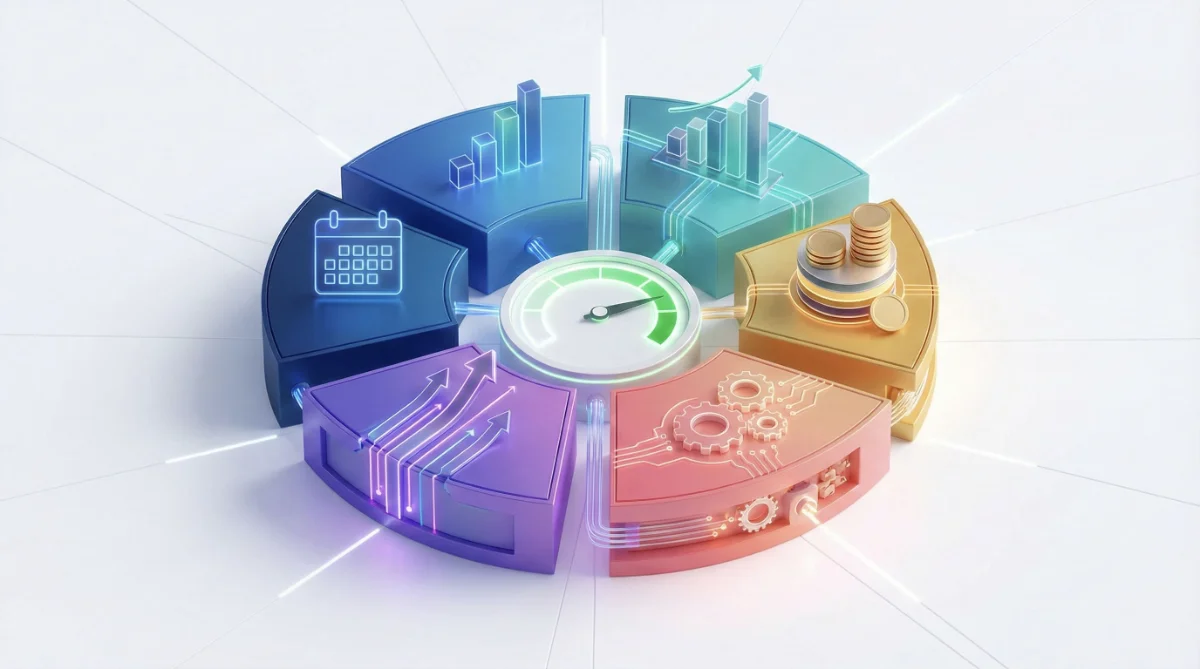
Your credit score isn't a mystery—it's calculated using five specific factors, each carrying a different weight in the final number. Payment history accounts for 35% of your FICO score, making it the single most influential factor, followed by amounts owed (30%), length of credit history (15%), credit mix (10%), and new credit (10%). Understanding these factors gives you a roadmap for improvement: you can't game the system, but you can make strategic decisions that positively impact each component. Whether you're building credit from scratch, recovering from financial setbacks, or optimizing an already-strong score, knowing exactly what affects your credit score empowers you to take control of your financial future. This guide breaks down each factor, explains how it's calculated, and provides actionable steps to strengthen your credit profile.
The FICO Score Formula: How Your Credit Score Is Calculated
The FICO scoring model, created by the Fair Isaac Corporation and used by over 90% of top lenders, evaluates your credit behavior across five distinct categories. Each category contributes a specific percentage to your overall score.
If you're new to credit scores, our credit score basics guide provides a helpful foundation before diving into these factors.
| Factor | Weight | Impact Level |
|---|---|---|
| Payment History | 35% | Highest |
| Amounts Owed (Credit Utilization) | 30% | Very High |
| Length of Credit History | 15% | Moderate |
| Credit Mix | 10% | Lower |
| New Credit | 10% | Lower |
These percentages are general guidelines from FICO. Your actual score calculation may weight factors slightly differently based on your unique credit profile and how much information is in your credit file.
Let's examine each factor in detail, starting with the most impactful.
Factor 1: Payment History (35%)
Payment history is the heavyweight champion of credit scoring factors—and for good reason. Lenders want to know one thing above all else: will you pay them back on time?
What Payment History Includes
Your payment history tracks whether you've paid your bills on time across all credit accounts:
- Credit cards (Visa, Mastercard, American Express, Discover)
- Retail accounts (store credit cards)
- Installment loans (auto loans, personal loans)
- Mortgage loans
- Finance company accounts
It also records negative events like:
- Late payments (30, 60, 90+ days overdue)
- Accounts sent to collections
- Bankruptcies
- Foreclosures
- Repossessions
How Late Payments Affect Your Score
Not all late payments are equal. The impact depends on several factors according to myFICO's payment history education center:
- How late was the payment? A 90-day late payment hurts more than a 30-day late payment
- How recent is the late payment? A late payment from last month damages your score more than one from five years ago
- How many late payments exist? Multiple delinquencies compound the damage
- What was the amount? Larger delinquent balances can have greater impact
Payments must be at least 30 days late before they're reported to credit bureaus. Being a few days late typically only results in a late fee from your lender—not credit damage. However, don't test this boundary; set up autopay for at least the minimum payment to protect your score.
How to Improve Payment History
- Set up automatic payments for at least the minimum due
- Create calendar reminders 5-7 days before due dates
- Contact your lender immediately if you'll miss a payment—they may offer a grace period
- Consider balance alerts to ensure you always have funds available
Factor 2: Amounts Owed / Credit Utilization (30%)
The amounts owed category primarily focuses on credit utilization—the percentage of available credit you're currently using. This is the most actionable factor because changes show up quickly on your credit report.
Understanding Credit Utilization
Credit utilization is calculated with a simple formula:
Credit Utilization = (Credit Card Balance ÷ Credit Limit) × 100
For example, if you have a $1,500 balance on a card with a $5,000 limit, your utilization on that card is 30%.
FICO looks at utilization in two ways:
- Per-card utilization: The ratio on each individual card
- Overall utilization: Total balances divided by total credit limits
For a deeper dive into this crucial metric, see our complete credit utilization guide.
Utilization Targets to Aim For
According to Experian's credit education resources:
| Utilization Level | Impact on Score |
|---|---|
| 0% | May be seen as inactive |
| 1-9% | Optimal for highest scores |
| 10-29% | Good, minimal negative impact |
| 30-49% | Starting to show risk signals |
| 50-74% | Noticeable negative impact |
| 75%+ | Significant score damage |
Note: These thresholds are industry guidance based on credit score analysis, not official FICO specifications.
Here's a pro tip many people miss: Even if you pay your balance in full every month, your credit report often shows your statement balance, not zero. To show lower utilization, make a payment before your statement closing date, or make multiple payments throughout the month.
What Else "Amounts Owed" Includes
Beyond utilization, this category also considers:
- Total debt across all accounts
- Number of accounts with balances
- How much you owe on installment loans vs. the original amount (e.g., if you've paid down 80% of your auto loan, that's positive)
How to Improve Amounts Owed
- Pay down credit card balances to below 30%—ideally below 10%
- Request credit limit increases (but don't spend more!)
- Make multiple payments per month to keep balances low
- Avoid maxing out any single card, even if overall utilization is low
- Keep paying down installment loans on schedule
Factor 3: Length of Credit History (15%)
Lenders prefer borrowers with longer track records of responsible credit use. A decade of on-time payments demonstrates reliability in a way that six months simply can't.
What FICO Considers
According to myFICO, the length of credit history category evaluates:
- Age of your oldest account
- Age of your newest account
- Average age of all accounts
- How long specific account types have been established
- Time since you last used certain accounts
Why This Matters for New Credit Users
A shorter history isn't an automatic disqualifier for good credit. If your other factors are strong—especially payment history and utilization—you can still achieve a solid score with limited history.
However, length of history is why financial experts often recommend:
- Keeping your oldest credit card open, even if you rarely use it
- Thinking twice before closing old accounts, as it lowers your average age
- Starting early with a secured credit card or becoming an authorized user
How to Build Credit History
- Apply for a secured credit card if you're just starting out
- Become an authorized user on a family member's established account
- Keep old accounts open and occasionally active
- Avoid opening many new accounts in a short period (see Factor 5)
For step-by-step strategies, check out our guide on how to improve your credit score.
Factor 4: Credit Mix (10%)
Credit mix refers to the variety of credit accounts in your portfolio. FICO looks at whether you can manage different types of credit responsibly.
Types of Credit Accounts
Credit accounts fall into two main categories:
Revolving Credit:
- Credit cards
- Store credit cards
- Home equity lines of credit (HELOCs)
- Gas station cards
Installment Credit:
- Mortgages
- Auto loans
- Student loans
- Personal loans
Does Credit Mix Really Matter?
At only 10% of your score, credit mix is a relatively minor factor. myFICO notes that having a mix of revolving and installment accounts is favorable, but it's not necessary to have one of each type to build excellent credit.
Important: Never open a new account just to improve your credit mix. The benefits are minimal compared to the potential downsides of:
- Hard inquiries (temporarily lower score)
- New account lowering average age
- Temptation to overspend
When Credit Mix Helps Most
Credit mix tends to matter more when:
- Your credit file is "thin" (limited history)
- Other factors are strong and similar to other consumers
- You're borderline between score categories
Factor 5: New Credit (10%)
The new credit category examines your recent credit-seeking behavior. Opening several new accounts in a short period can signal financial distress to lenders.
What This Factor Measures
- Number of recently opened accounts
- How many hard inquiries in the past 12 months
- Time since you opened your most recent account
- How many accounts are considered "new"
Understanding Hard Inquiries
When you apply for credit, the lender pulls your credit report, creating a "hard inquiry." According to Experian:
- Hard inquiries remain on your report for 2 years
- They only affect your score for 12 months
- Each inquiry typically causes a drop of less than 5 points
- Multiple inquiries can add up
The Rate Shopping Exception
Here's good news for comparison shoppers: FICO recognizes that consumers should shop around for the best rates on major loans. Multiple inquiries for mortgages, auto loans, or student loans within a 45-day window count as a single inquiry.
This means you can apply to five different mortgage lenders in a month without five separate hits to your score.
The 45-day rate shopping window applies to FICO Score 8 and newer versions. Older FICO versions use a 14-day window. This protection does not apply to credit card applications—each one counts as a separate inquiry.
For a complete comparison of how different scoring models treat inquiries and other factors, see our FICO vs. VantageScore breakdown.
How to Manage New Credit
- Only apply for credit you genuinely need
- Space out credit applications when possible
- Do your rate shopping for major loans within a 45-day window
- Remember that inquiries matter less as your credit file matures
How Long Do Negative Items Affect Your Score?
Understanding the timeline of negative items helps you plan your credit recovery. Here's how long various marks remain on your credit report according to Experian and myFICO:
| Negative Item | Time on Report |
|---|---|
| Late payments (30-180 days) | 7 years |
| Collection accounts | 7 years |
| Chapter 7 Bankruptcy | 10 years |
| Chapter 13 Bankruptcy | 7 years |
| Foreclosures | 7 years |
| Repossessions | 7 years |
| Hard inquiries | 2 years (affects score for 12 months) |
Key insight: The impact of negative items diminishes over time. A late payment from six years ago hurts far less than one from six months ago. If you have past mistakes on your report, focus on building positive history going forward.
If you spot errors on your report that shouldn't be there, learn how to dispute credit report errors effectively.
Credit Score Myths That Can Hurt You
Misinformation about credit scores is rampant. Let's debunk the most damaging myths:
Myth: Checking Your Own Credit Hurts Your Score
Reality: Checking your own credit is a "soft inquiry" with zero impact on your score. Check it regularly—the CFPB recommends monitoring your reports at least annually.
Myth: Carrying a Balance Builds Credit
Reality: You don't need to pay interest to build credit. Paying your balance in full every month is actually better—it keeps utilization low and saves you money. Credit is built through responsible use and on-time payments, not through debt.
Myth: Closing Old Cards Improves Your Score
Reality: Closing cards typically hurts your score by reducing available credit (raising utilization) and lowering your average account age.
Myth: Income Affects Your Credit Score
Reality: Income is not a factor in FICO or VantageScore calculations. Credit scores only use data from your credit reports. Lenders may consider income separately, but it won't change your score.
Myth: Debit Cards Build Credit
Reality: Debit card transactions are not reported to credit bureaus. Only credit accounts build credit history.
What About VantageScore?
While FICO dominates lending decisions, you may encounter VantageScore (created by the three major credit bureaus) through free credit score services. The factors are similar but weighted differently:
| Factor | FICO Weight | VantageScore 4.0 Influence |
|---|---|---|
| Payment History | 35% | Extremely Influential |
| Credit Utilization | 30% | Highly Influential |
| Credit Age | 15% | Highly Influential |
| Credit Mix | 10% | Moderately Influential |
| New Credit | 10% | Less Influential |
Note: VantageScore uses influence levels rather than specific percentages.
Understanding how these scores work—and why they differ—helps explain why the "free score" from your bank might not match what a lender sees. Learn more in our FICO vs. VantageScore guide.
How to Monitor Your Credit Score Factors
Knowledge is power when it comes to credit. Here's how to stay informed:
- Get your free credit reports at AnnualCreditReport.com (one from each bureau per year)
- Use free credit monitoring through your bank or credit card issuer
- Learn to read your credit report—our guide on how to read your credit report walks you through every section
- Set up alerts for new accounts, hard inquiries, or significant changes
Conclusion: Taking Control of Your Credit Score
Your credit score reflects five measurable factors that you can actively manage:
- Payment History (35%): Never miss a payment. Set up autopay.
- Amounts Owed (30%): Keep utilization below 30%—ideally under 10%.
- Length of Credit History (15%): Keep old accounts open. Start building early.
- Credit Mix (10%): Manage different account types responsibly, but don't open unnecessary accounts.
- New Credit (10%): Apply strategically. Take advantage of rate shopping windows.
The most impactful improvements come from the first two factors. Pay every bill on time and keep your credit card balances low relative to your limits. These actions alone can significantly boost your score over time.
Remember: credit improvement is a marathon, not a sprint. Make consistent, responsible choices, and your score will follow.
Credit scores typically update whenever your credit report changes—usually once a month when your creditors report new information. However, each creditor reports on different dates, so your score could theoretically change multiple times per month as different accounts update.
Yes. Each of the three major credit bureaus (Equifax, Experian, TransUnion) may have slightly different information about you, leading to different scores. Additionally, not all creditors report to all three bureaus, and there are many different scoring models (FICO 8, FICO 9, VantageScore 3.0, etc.) that can produce different results.
No—a paid collection account typically remains on your credit report for 7 years from the original delinquency date. However, newer scoring models (FICO 9, VantageScore 3.0/4.0) ignore paid collections in their calculations. Some creditors may agree to "pay for delete," but this isn't guaranteed.
Credit utilization changes can impact your score within 30-60 days as creditors report updated balances. However, factors like payment history and credit age take longer to build. Most meaningful credit improvement happens over 6-12 months of consistent responsible behavior.
Traditional utility bills and rent payments are typically not reported to credit bureaus and don't affect your score. However, services like Experian Boost allow you to add utility and streaming payments to your Experian credit file, which can help your score with that bureau.
A 700 FICO score falls in the "Good" range (670-739). You'll likely qualify for most credit products, though you may not receive the very best interest rates reserved for those with "Very Good" (740-799) or "Exceptional" (800-850) scores.
The denial itself doesn't hurt your score—only the hard inquiry from the application does. Whether you're approved or denied, the inquiry impact is the same (typically less than 5 points). However, multiple applications in a short period can add up and signal credit-seeking behavior.
Disclaimer: The information provided on RichCub is for educational purposes only and should not be considered financial, legal, or investment advice. We recommend consulting with a qualified financial advisor before making any financial decisions. RichCub may receive compensation through affiliate links or advertising on this site.
RichCub Editorial Team
Contributor
Hard vs Soft Credit Inquiry: What's the Difference & How They Affect You
Secured Credit Cards: How They Work & Best Options for Building Credit
Related Articles
What Is a Credit Score? A Complete Beginner's Guide
Learn what a credit score is, how it's calculated, and why it matters. Understand FICO score ranges, the 5 key factors, and how to check your score for free.
How to Request a Credit Limit Increase (Without Hurting Your Score)
Learn how to request a credit limit increase the smart way. Discover which issuers do soft vs hard pulls, optimal timing, and step-by-step instructions.
Credit Repair Services: Are They Worth It? How to Choose Wisely
Learn if credit repair services are worth the cost, how to spot scams, and when DIY credit repair makes more sense. Expert guidance on choosing wisely.